


Ashtavinayak Ganesha: Know the 8 Forms of Ganpati and What Each One Symbolises
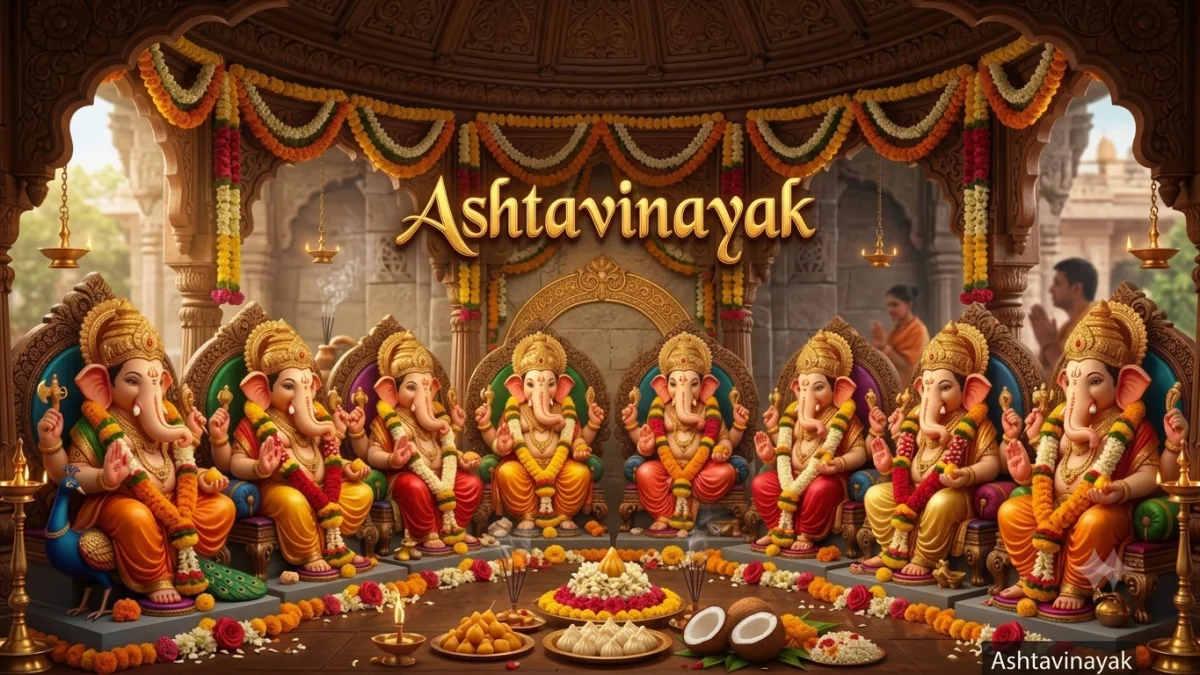
The eight forms of Lord Ganesha, known as Ashtavinayak, are not merely confined to mythology. They are also regarded as symbolic representations of different challenges in human life, mental weaknesses and stages of the spiritual journey. According to the Mudgala Purana, these eight forms of Ganesha defeated eight different demons, each representing a negative quality or weakness of the human mind.
1. Shri Vakratunda — Destroyer of Jealousy
Form and legend: Vakratunda is depicted riding a lion. He defeated Matsarasura, who represents jealousy and envy.
Significance: Worshipping Vakratunda is believed to help overcome jealousy, resentment and the tendency to feel envious of others' success. The name Vakratunda means “one with a curved trunk”, symbolising the ability to overcome even the most difficult and complicated paths.
2. Shri Ekadanta — Destroyer of Ego
Form and legend: Ekadanta rides a mouse and is depicted with one broken tusk. He defeated Madasura, who represents arrogance and pride.
Significance: The form of Ekadanta conveys the message that giving up ego is essential for protecting knowledge and righteousness. Devotion to this form is believed to cultivate humility and wisdom.
3. Shri Mahodara — Destroyer of Attachment and Delusion
Form and legend: Mahodara, meaning “the one with a large belly”, rides a mouse. He defeated Mohasura, who represents ignorance and blind attachment.
Significance: Mahodara teaches devotees how to absorb and overcome the pleasures, pains and illusions of worldly life while continuing on the path of knowledge. His worship is believed to help free a person from excessive attachment.
4. Shri Gajanana — Destroyer of Greed
Form and legend: Gajanana is the majestic and peaceful elephant-headed form of Lord Ganesha. He defeated Lobhasura, who symbolises greed.
Significance: The elephant head represents foresight, seriousness and expansive thinking. Worshipping Gajanana is believed to help overcome dissatisfaction and excessive greed while bringing greater stability to life.
5. Shri Lambodara — Destroyer of Anger
Form and legend: Lambodara is depicted with a large belly and a mouse as his vehicle. He defeated Krodhasura, who represents anger and rage.
Significance: Lambodara means “the one with a large belly that can contain everything.” This form teaches that one should learn to absorb life's bitter experiences and forgive the mistakes of others while maintaining inner calm. His worship is believed to help control anger. ALSO READ: 5 Lesser-Known Stories About Lord Ganesha and the Fascinating Beliefs Around Them
6. Shri Vikata — Destroyer of Desire
Form and legend: In the Vikata form, Lord Ganesha rides a peacock. He defeated Kamasura, who represents uncontrolled desire and lust.
Significance: His fierce and unusual form symbolises the destruction of negative energies and uncontrolled desires. Devotion to Vikata is believed to help devotees maintain concentration, self-control and discipline.
7. Shri Vighnaraja — Destroyer of Excessive Attachment and Ego
Form and legend: This divine form of Ganesha is depicted seated on Sheshnag. He subdued Mamtasura, who represents excessive selfish attachment and the possessive “mine and yours” mentality.
Significance: Vighnaraja is regarded as the remover of various obstacles, barriers and narrow-mindedness. His worship is believed to bring peace, prosperity and success without obstacles.
8. Shri Dhumravarna — Destroyer of Pride and Tamasic Qualities
Form and legend: Dhumravarna, whose complexion is described as smoke-coloured, rides a horse. He defeated Abhimanāsura, who represents false pride and the darkness of ignorance.
Significance: The Dhumravarna form is believed to help overcome confusion, uncertainty and the negative influence of the Kali Yuga. Worshipping this form is said to help devotees develop the wisdom to distinguish truth from falsehood.
Disclaimer: The content provided here is based on beliefs and information only. Always consult a concerned expert.


