Mohan Bhagwat Cites Bangladesh, Nepal Upheavals, Says Regime Change Rarely Solves Problems
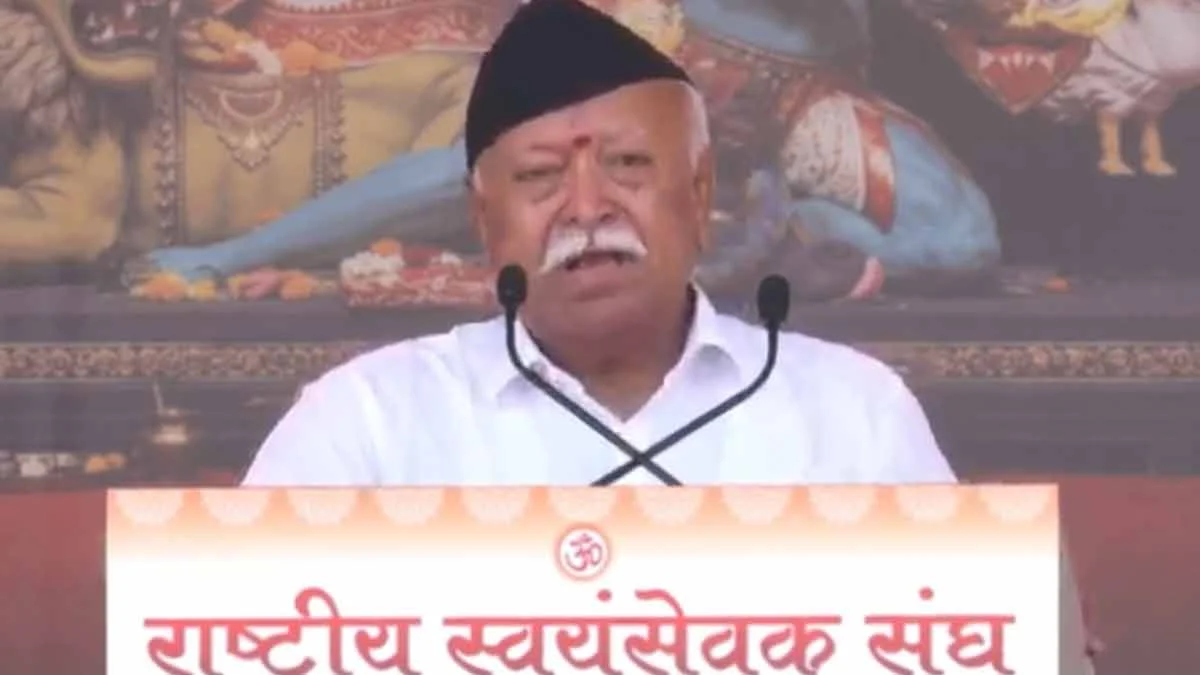
Rashtriya Swayamsevak Sangh (RSS) chief Mohan Bhagwat on Tuesday warned that movements aimed at changing governments do not necessarily address the root causes of problems. He cautioned that protests could be exploited for political interests and deepen social divisions instead of delivering meaningful solutions.
Addressing the RSS's annual Vijayadashami Utsav gathering in Nagpur, Bhagwat referred to recent political upheavals in Bangladesh, Nepal, France and Albania. He said forces driven by their own interests often use regime change to reshape political circumstances, but such efforts rarely produce the desired outcomes.
"They claim that changing a regime will change the situation, but that has never really happened," Bhagwat said.
He argued that as India grows stronger, forces seeking to weaken and divide the country could increasingly target it. While some global powers support India's development, he said, they do not want the country to become so powerful that it challenges their dominance.
Protests in a Democracy Should Focus on Solutions
Speaking about the role of protests in a democratic system, the RSS chief said demonstrations were inevitable in a democracy, but their primary objective should be to resolve problems rather than aggravate social divisions.
"Problems will remain, and protests are inevitable in a democracy. But what should the purpose of protests be? They should be aimed at finding solutions," he said.
Bhagwat cautioned that protests could turn into political tools when their objectives went beyond public welfare. Such movements, he said, could encourage hostility towards individuals, communities or particular ideologies instead of addressing the issues that prompted them.
He urged political leaders, protesters and the administration to act responsibly and ensure that their conduct did not create bitterness or divisions in society.
"However intense our emotions may be, we must respect the limits set by our Constitution, the norms of civilised public discourse and standards of decent conduct," he said.
Bhagwat Calls for Regulation of OTT Content
Bhagwat also stressed the need to help younger generations develop the ability to critically assess the information and content they consume. Expressing concern over the potential adverse effects of unrestricted content, particularly on over-the-top (OTT) platforms, he urged the government to consider appropriate regulations in the larger interest of society.
He noted that several countries had introduced regulations and restrictions on social media platforms after experiencing their adverse consequences. Indian society, too, was increasingly recognising the need for similar measures, particularly concerning OTT content, he added.
However, Bhagwat said regulation alone was not enough. Even when information is freely available, young people must be taught to distinguish between appropriate and inappropriate content and exercise sound judgement.
He called on parents and elders to play an active role in helping children and young people develop this discernment.
Material Progress Must Not Come at the Cost of Society
The RSS chief said balanced and comprehensive development should extend beyond material prosperity and physical comforts. Science and technology can improve living standards and encourage rational thinking, he noted, but they should be viewed as means to an end rather than ends in themselves.
He cautioned that development driven exclusively by consumerism and materialism could offer greater convenience while causing deeper social and human costs.
Drug Addiction a Serious National Concern
Bhagwat described drug addiction as a serious national problem that requires timely intervention from both the government and society.
He called for concerted efforts to tackle the issue and prevent young people from falling into harmful habits. Parents and senior members of society, he said, have an important responsibility to guide the younger generation and encourage them to stay away from influences and activities that could lead to addiction.
Nepal Floods Highlight Risks of Uneven Himalayan Development
Referring to the devastating floods in Nepal, Bhagwat said the disaster could partly be linked to the consequences of one-sided development across the Himalayan region.
He pointed out that the Himalayan belt extends across several countries, making it important to consider the broader regional impact of development activities. His remarks underscored the need for a more balanced approach to development across the region. ALSO READ: Tiger Shroff Firing Case: CCTV Captures Suspects Rushing to Board Train at Surat Station