PM Modi Announces Free Online Coaching for Competitive Exams on I-Day
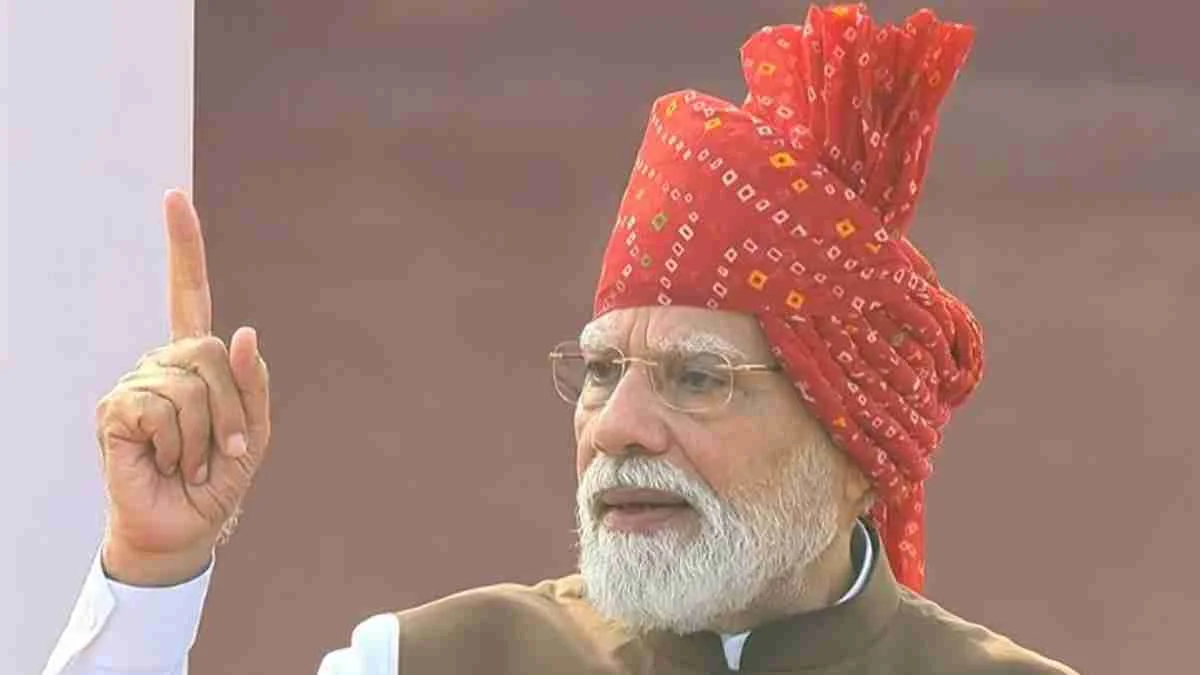
Prime Minister Narendra Modi on Saturday announced free online coaching for various competitive examinations, seeking to ease the financial burden on families and make quality exam preparation accessible to young aspirants across the country.
The announcement came during Modi’s Independence Day address from the Red Fort and against the backdrop of growing concerns among students over the rising cost of coaching, examination-related controversies and alleged irregularities in the recruitment and examination system.
For millions of young Indians preparing for government jobs and other competitive examinations, coaching has become an integral part of the preparation process. However, the expense involved has increasingly emerged as a major challenge, particularly for middle-class and economically weaker families.
“The competition surrounding coaching classes has become a huge burden on middle-class families,” Modi said from the ramparts of the Red Fort.
“Every parent feels that if they do not send their child to a coaching centre, they are somehow falling behind or do not belong to a respectable family,” he said.
The Prime Minister said the coaching ecosystem was placing a significant financial burden on families, with parents spending large amounts in the hope of giving their children an edge in highly competitive examinations.
“Therefore, we have decided to provide free online coaching for various competitive examinations for our youth,” Modi announced.
Digital Infrastructure to Power Free Coaching
Modi linked the initiative to India's expanding digital infrastructure and the availability of talented teachers and educators.
“We have digital public infrastructure, and we have highly talented teachers and educators,” he said, suggesting that technology could help bridge the gap between students who can afford expensive coaching and those who cannot.
The proposed online model could also allow students to prepare for examinations without having to relocate to major coaching hubs.
Modi said young people should not have to move away from their families merely to prepare for an examination or force their parents to bear expenses that could put household finances under severe pressure.
For students in smaller towns and villages, such an initiative could potentially provide access to teachers, study material and test-preparation resources that are often concentrated in cities.
Exam Controversies Add to Student Concerns
The announcement comes at a time when examination-related issues have become increasingly sensitive among India's youth.
Competitive examinations are a crucial route to employment for millions of young Indians, particularly those seeking government jobs. The intense competition has fuelled a massive coaching industry in cities such as Kota and Delhi.
At the same time, students from smaller towns and economically weaker backgrounds often struggle to match the resources available to candidates who can afford expensive coaching, study material, test series and accommodation in coaching centres.
Youth-led protests have also erupted over alleged irregularities in examinations, including the NEET-UG 2026 paper leak controversy and concerns over the conduct and evaluation of other examinations.
One prominent protest was held at Delhi's Jantar Mantar, where students demanded accountability and reforms in the examination system.
The controversies have fuelled a wider debate over the credibility of India's examination ecosystem, with students arguing that flaws in the system can put years of preparation and significant family investments at risk.
Government Moves Against Exam Malpractice
Against this backdrop, the government has also sought to strengthen the legal framework dealing with examination malpractice.
The Public Examinations (Prevention of Unfair Means) Amendment Bill, 2026, was passed by the Lok Sabha during the Monsoon Session after the government said tougher provisions were needed to deter paper leaks and other unfair practices.
The legislation came amid a broader national debate over examination integrity and the vulnerabilities of large-scale competitive tests.
Modi's free coaching announcement addresses another dimension of the problem — the inequality that can exist even before students enter the examination hall.
Can Free Coaching Level the Playing Field?
For students from financially secure families, enrolling in reputed coaching institutes, purchasing test series and study material, taking mock examinations and relocating to a coaching hub may be affordable.
For aspirants from low-income or lower-middle-class households, however, the same process can involve years of savings, loans and sacrifices by parents.
Modi's announcement seeks to narrow that divide by making preparation resources available online without tuition fees.
The Prime Minister also highlighted the social pressure surrounding coaching. For many families, coaching has moved beyond being an optional academic support system and has become something they feel is essential to remain competitive.
The proposed online system could therefore have an impact beyond reducing tuition expenses if it is implemented on a large scale and offers credible faculty, high-quality study material, reliable mock tests and comprehensive preparation.
It could also help students outside major education centres access resources that have traditionally been concentrated in cities.
Implementation Will Be Crucial
Free access, however, may not automatically eliminate existing inequalities.
Students with better internet connectivity, private study spaces, additional academic support and the ability to dedicate years to preparation could continue to enjoy an advantage.
The effectiveness of the proposed platform will therefore depend on several factors, including the quality of teaching, language diversity, technological accessibility, testing systems and the credibility of the courses.
If these aspects are addressed effectively, the initiative could become a significant tool for democratising access to competitive-exam preparation. ALSO READ: PM Modi’s 80th I-Day Speech: Women’s Quota, ‘Dimagi Naxals’ & Viksit Bharat
A Strategic Outreach to Gen Z
The announcement also carries a clear political and social message.
By addressing one of the most visible concerns among young Indians from the Red Fort, Modi sought to connect the government's broader development agenda with the everyday challenges faced by students and their families.
For a generation that has grown up with smartphones, online classrooms and digital learning platforms, government-backed online coaching could represent a more accessible form of public support.
However, its success will ultimately depend on whether students trust the system and whether its preparation quality can compete with India's established coaching ecosystem.
Modi's announcement was therefore more than a promise of free classes. It acknowledged that for millions of young Indians, the journey towards a competitive examination begins long before the examination hall — and that the cost of preparation itself can become a barrier.
By promising to leverage India's digital infrastructure and “highly talented teachers and educators”, the Prime Minister placed affordability, access and exam preparation at the centre of his outreach to Gen Z.
The challenge now is to translate the announcement into a credible and effective system where a student's prospects depend less on their family's financial capacity and more on their ability, preparation and determination.