


90% of Road Accidents Due to Human Error; How ADAS Technology Could Save Lives
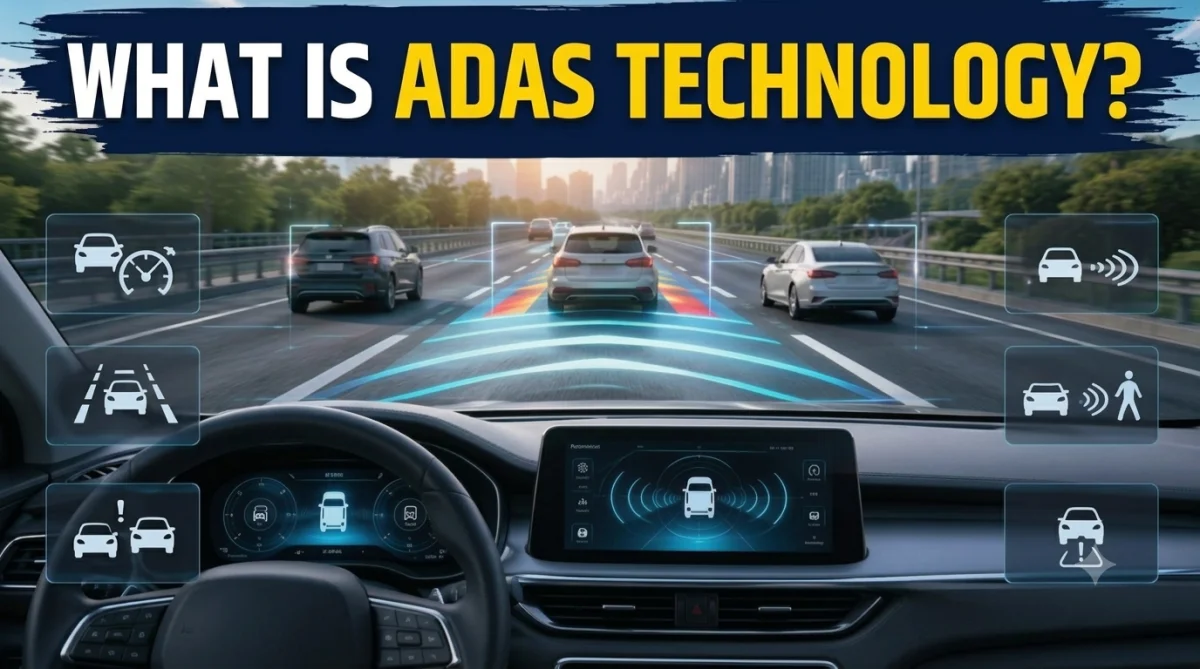
Human error is considered one of the biggest contributors to road accidents. Whether it is distracted driving, fatigue, speeding or failing to react in time to an unexpected obstacle, a momentary mistake can sometimes lead to a serious crash. This is where ADAS, or Advanced Driver Assistance Systems, comes into play.
Designed to support drivers and improve vehicle safety, ADAS uses a combination of advanced sensors, cameras, radar and software to detect potential hazards, warn the driver and, in some situations, assist with braking or steering.
What Is ADAS and How Does It Work?
ADAS is an integrated network of technologies installed in a vehicle. Depending on the vehicle and its features, the system may use:
- Cameras
- Radar sensors
- Ultrasonic sensors or sonar
- Other vehicle sensors
- On-board computers and advanced software
These systems constantly monitor the area around the vehicle and process information in real time.
Monitoring the Surroundings
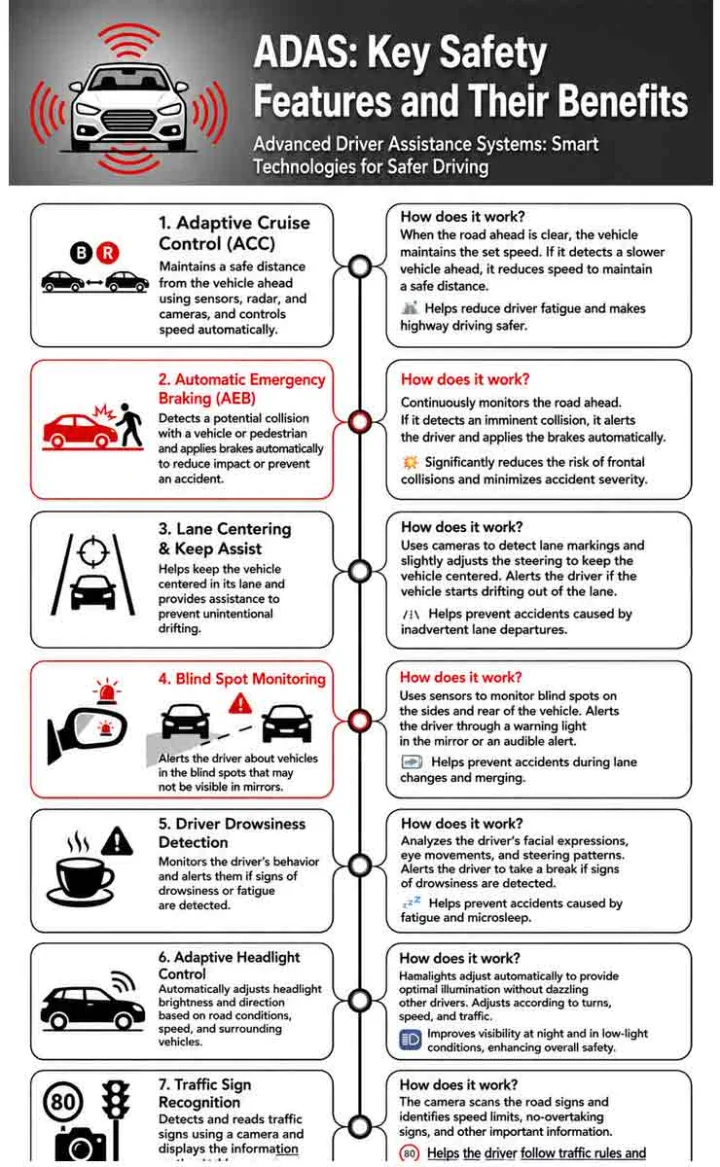
ADAS can help detect vehicles, pedestrians, obstacles and lane markings around the car. Features such as blind-spot monitoring, parking sensors and cameras can provide the driver with additional awareness in situations where visibility may be limited.
The exact performance of these systems can vary depending on factors such as weather, lighting, road conditions and the capabilities of the specific vehicle.
Real-Time Alerts and Driver Assistance
When the system detects a possible risk, it can warn the driver through visual or audible alerts. Some vehicles may also provide steering-wheel or seat vibrations.
Depending on the ADAS feature available, the vehicle may also assist with actions such as emergency braking, maintaining a safe distance from the vehicle ahead or helping the driver stay within a lane.
However, ADAS is designed to assist the driver, not replace them.
The 6 Levels of Driving Automation
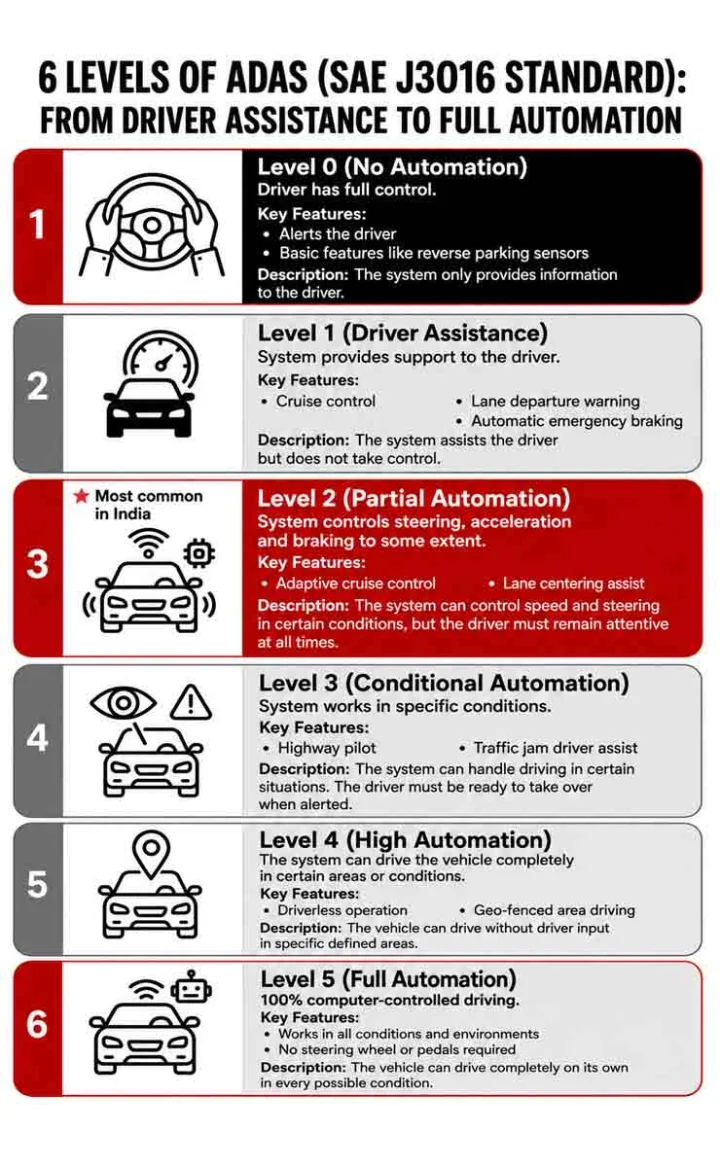
The Society of Automotive Engineers (SAE) broadly classifies driving automation into six levels, ranging from Level 0 to Level 5.
Level 0: No Driving Automation
The driver is fully responsible for operating the vehicle. The system may provide warnings or momentary assistance, but it does not continuously control the vehicle.
Level 1: Driver Assistance
At least one driving support function is available, such as assistance with speed or steering under specific conditions. The driver remains responsible for driving.
Level 2: Partial Driving Automation
This is the level commonly associated with advanced driver-assistance features in modern passenger vehicles. The system may control acceleration, braking and steering in certain situations, using features such as adaptive cruise control and lane-centering assistance.
However, the driver must remain attentive and continuously supervise the driving environment.
Level 3: Conditional Driving Automation
Under specific operating conditions, the system can handle the driving task without constant driver control. However, the driver must be ready to take back control when the vehicle requests intervention.
Level 4: High Driving Automation
At this level, the vehicle can perform the entire driving task within specific operational areas or conditions, such as designated geo-fenced zones. Human intervention may not be required within those defined conditions.
Level 5: Full Driving Automation
A Level 5 system would be capable of performing all driving tasks under all conditions without human intervention. Such a vehicle would theoretically not require a human driver to take control.
Why Drivers Should Not Over-Rely on ADAS
One of the most important things to understand is that a car equipped with Level 2 or Level 3 technology is not necessarily a fully autonomous vehicle.
Drivers should never assume that the vehicle can safely handle every situation on its own. Taking a nap, leaving the driver's seat or completely disengaging from driving responsibilities can be extremely dangerous unless the vehicle and its operating conditions are specifically designed and legally approved for driverless operation.
Indian road conditions can present additional challenges, including unpredictable traffic movement, pedestrians, animals, inconsistent lane markings and other obstacles. These situations may affect how driver-assistance systems perform.
A Major Step Towards Safer Driving
ADAS represents an important advancement in automobile safety. By continuously monitoring the road and assisting drivers in identifying potential hazards, these technologies can help reduce the risk or severity of certain accidents.
However, the technology has limitations and cannot eliminate all risks. Safe driving practices, driver attention and compliance with traffic rules remain essential.
In simple terms, ADAS can be an extra set of eyes and a valuable safety assistant—but it is not a substitute for an alert and responsible driver.


