


Drishyam: The Conclusion Review: Ajay Devgn Returns With Silence, Strategy and Suspense
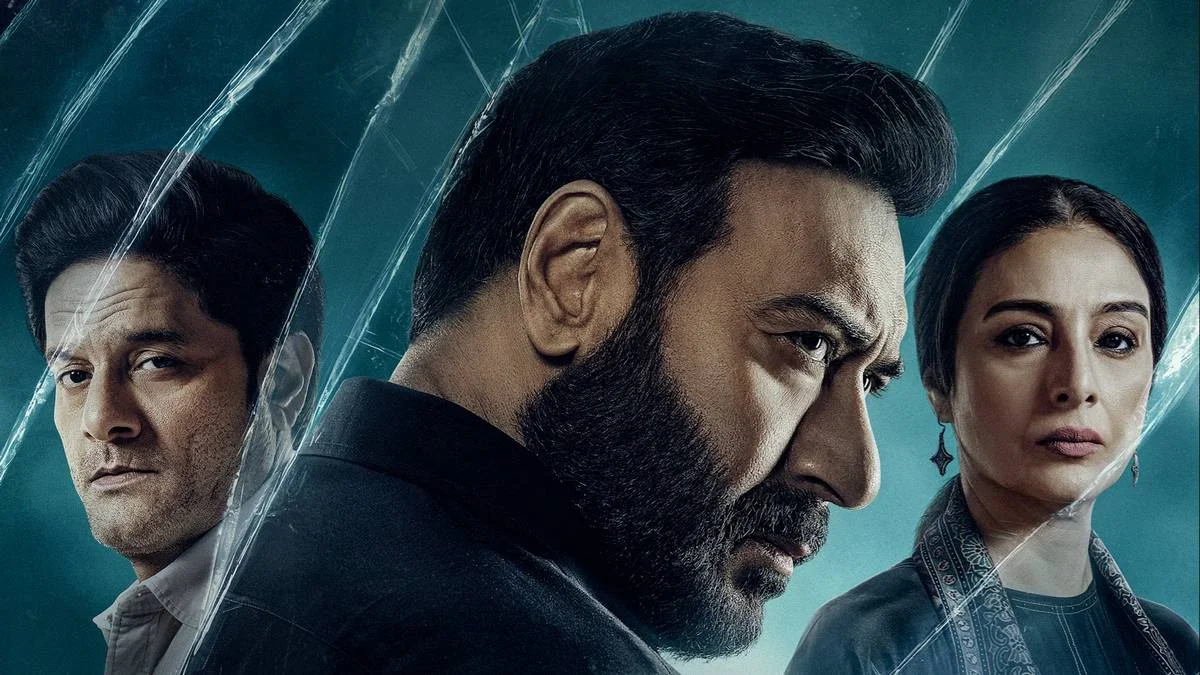
Some films continue to occupy your mind long after the credits roll. Their characters, dialogues and twists keep playing in your head. The Drishyam franchise belongs to this category. Despite being rooted in crime and suspense, its real strength lies in its emotional core: a family man willing to go to extraordinary lengths to protect his loved ones.
A man commits a crime to save his family and then plays a cat-and-mouse game with the law to shield them from its consequences. The fascinating part is that audiences continue to stand by him even when they know what he has done. This contradiction is what sets Drishyam apart from an ordinary crime thriller.
Drishyam: The Conclusion takes this familiar battle to what is presented as its final chapter. This time, Vijay Salgaonkar is up against more than just the police. He faces Rajveer Singh Tomar, an officer determined to reopen the old case and examine every detail, as well as Inderjit Shetty, a lawyer searching for weaknesses in the carefully constructed world Vijay has built. The maze surrounding Vijay is now more complicated than ever.
Meera Deshmukh has still not come to terms with the death of her son. What torments her even more is her conviction that Vijay Salgaonkar is responsible. Yet, without sufficient evidence, she remains unable to bring him to justice. Her grief has gradually transformed into a desire for revenge.
Superintendent of Police Rajveer Singh Tomar is assigned the task of reopening the case. Drawn to complicated investigations, Tomar begins scrutinising Vijay's family and examining the events of the past from a fresh perspective. He discovers several gaps that could create serious trouble for Vijay.
The film establishes its central suspense early on. The mystery is not about who committed the crime. The real question is whether Vijay can stay several steps ahead of the police once again.
Rajveer Singh Tomar Raises the Stakes
Tomar is introduced as a formidable investigator. He takes his responsibility seriously, but the film presents his pursuit in a way that encourages viewers to see him as an adversary. This is one of the franchise's familiar tricks: an officer may be doing his job correctly, yet the audience remains emotionally invested in the man he is trying to expose.
Preparations are underway for the wedding of Vijay's elder daughter. The prospective groom's family has arrived at the Salgaonkar home when Tomar turns up. From the officer's perspective, it is simply part of his investigation. For Vijay's family, however, the interruption feels almost like an attack on their home.
This is where the film begins playing with the audience's emotions. Tomar may be justified in the eyes of the law, but in the world of Drishyam, being right and being liked are two entirely different things.
Tomar becomes a serious threat to Vijay, but the story introduces another major player after the interval. With Inderjit Shetty's arrival, the narrative moves into courtroom-drama territory.
Played by Prakash Raj, Shetty is a lawyer prepared to use every legal instrument at his disposal to win the case. The weaknesses Tomar uncovers during his investigation become weapons in Shetty's hands inside the courtroom. Former police officer Gaitonde also remains firmly opposed to Vijay.
For a while, it appears that the entire structure Vijay has painstakingly built could finally collapse. But this is precisely where Drishyam attempts to deliver its signature twist.
Vijay's Planning Remains the Film's Biggest Draw
Gradually, the narrative shifts back towards Vijay, revealing the layers of preparation concealed beneath his seemingly ordinary actions. The courtroom sequences attempt to demonstrate how much thought and planning can lie behind a single event.
However, this is also where the film reveals some of its weaknesses. Despite the scale of the confrontation, the number of genuinely gripping and thrilling moments is lower than expected. Some scenes stretch on for too long, while the narrative occasionally moves more slowly than audiences might anticipate from this franchise.
Tomar is introduced with considerable strength, but the film does not fully capitalise on the potential of his character. He initially appears to be Vijay's most formidable opponent, yet his impact diminishes as the story progresses.
Vijay, meanwhile, remains largely silent for much of the film. His restraint is an essential part of the character, but there are moments when the same silence slows the narrative rather than building tension.
Director Abhishek Pathak deserves credit for compensating for several of these shortcomings through his presentation. He makes complicated developments relatively easy to follow and avoids making Vijay's plans unnecessarily convoluted.
The suspense in Drishyam has never depended entirely on what happens next. It comes from wondering what Vijay might have anticipated long before everyone else realised there was a problem.
Ajay Devgn Leads With a Restrained Performance
Ajay Devgn has fully settled into the character of Vijay Salgaonkar. His performance does not rely on dramatic outbursts or excessive dialogue. Instead, he uses controlled expressions, measured reactions and the constant impression that he is hiding something.
These subtle details have become central to Vijay's identity, and Devgn understands them well.
Shriya Saran has limited opportunities to make a substantial impact, while Tabu and Rajat Kapoor also operate within relatively restricted roles. Prakash Raj makes his presence felt during the courtroom portions, bringing authority to the character of Inderjit Shetty.
The film's most striking performance, however, comes from Jaideep Ahlawat.
As Rajveer Singh Tomar, Ahlawat conveys both the frustration and determination of an investigating officer through his body language, expressions and dialogue delivery. He does more than simply play a police officer pursuing a suspect; he gives the investigation a sense of urgency.
While Devgn's Vijay plays the game through silence and calculated restraint, Ahlawat's Tomar continually challenges that silence. Their contrasting approaches provide some of the film's most engaging moments.
Cinematography and Background Score Support the Tension
Sudhir K. Chaudhary's cinematography strengthens the film's tense atmosphere, while Amar Mohile's background score adds impact at important moments.
Sandeep Francis's editing is clean and helps audiences follow the complicated chain of events without becoming unnecessarily confused.
Although Drishyam: The Conclusion does not sustain the relentless tension associated with its predecessors, its performances, central mystery and presentation help hold the narrative together. Some sequences are longer than necessary, and a few well-established characters are not used to their full potential. Nevertheless, the film retains enough of the franchise's defining qualities to remain engaging.
Most importantly, it does not abandon the fundamental question that made Drishyam distinctive: how far can a man go to protect his family from the law?
This time, Vijay must contend with the police, a determined lawyer and the weaknesses in his own carefully constructed story. Yet he continues to remain silent.
Because in the world of Drishyam, the real question is not simply who committed the crime. It is who has been writing the story all along.
Drishyam: The Conclusion (2026) — Movie Details
Director: Abhishek Pathak
Lyricists: Manoj Muntashir, Aamil Keeyan Khan, Karma
Music composers: Ravi Basrur, Karma, Rochak Kohli
Cast: Ajay Devgn, Shriya Saran, Tabu, Jaideep Ahlawat, Prakash Raj, Rajat Kapoor, Ishita Dutta, Mrunal Jadhav and Kamlesh Sawant
Certification: UA (16+)
Runtime: 2 hours 30 minutes
Rating: 3.5/5


