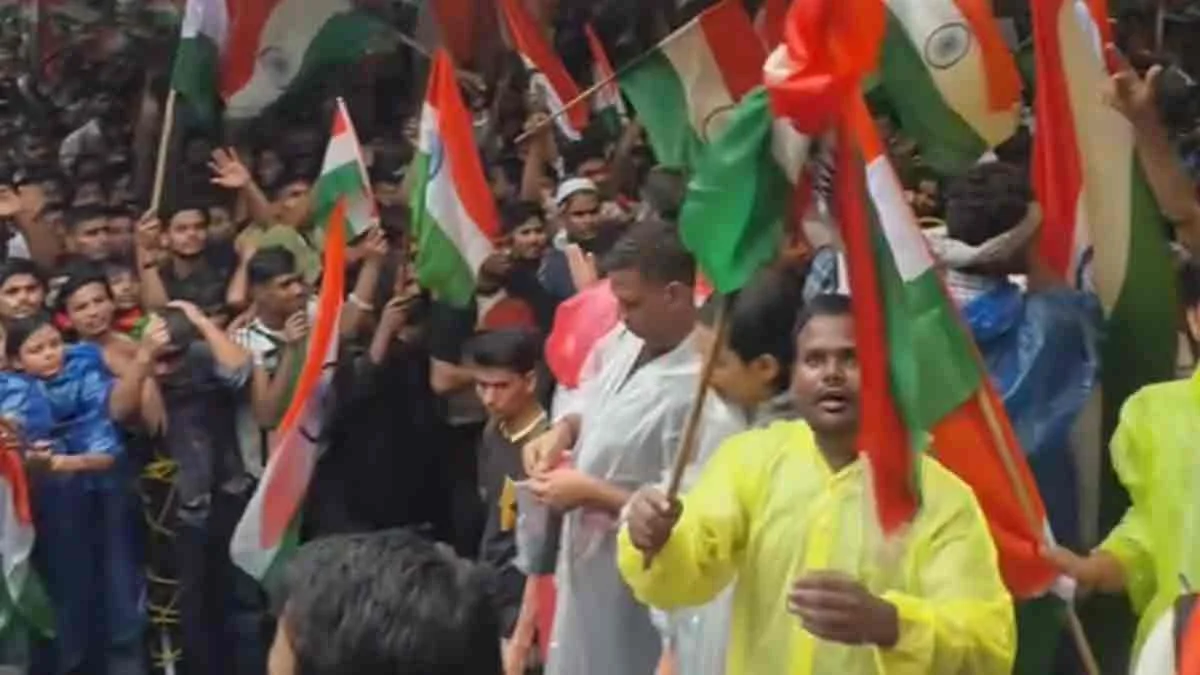
India's Cockroach Janta Party (CJP) on Monday morning appeared to go on with its plans for the "Chalo Sansad" march to the parliament in New Delhi despite a denial of permission from the police, risking a standoff.
The protest movement — which is demanding the resignation of Education Minister Dharmendra Pradhan over a major test paper leak fiasco — has called on the hundreds of supporters expected to join the march to carry out a "a peaceful and disciplined protest"
The march comes on the first day of the Indian Parliament's monsoon session.
On Sunday evening, the Delhi Police denied the youth-led protest permission to march.
Prohibitory orders have been imposed in the New Delhi district, barring the gathering of five or more people, except at the designated protest site of Jantar Mantar where protestors have pitched a camp since June 20.
"Delhi Police hereby categorically clarifies that no permission has been sought or granted for any such protest march/procession," a public advisory said.
"As Parliament session is commencing from 20 July, strict security arrangements are in place to ensure public safety, security of protectees, and the protection of vital government installations," the police said, adding that any violations of its order would be liable for legal action.
On Monday, CJP's founder Abhijeet Dipke hailed the Indian constitution in a social media post.
Late on Sunday evening, Dipke shared a video message on Instagram saying that the success of the march lies in it being peaceful and called on protesters to carry roses, pictures of Mahatma Gandhi — the symbol of India's non-violent freedom movement — or the Indian constitution book.
ALSO READ: Japan's superstitions make some homes hard to sell or rent
What is happening at Jantar Mantar now?
DW's Shalu Yadav who is on the ground at Jantar Mantar, reports that hundreds, if not thousands, of police, and paramilitary security forces have deployed.
She describes the protest site as a fortress now, surrounded by multi layer police barricading.
"As I walk in I can hear the deep hum of slogans in the air," Yadav reports.
The police is repeatedly broadcasting on loudspeakers, asking protesters to move inside Jantar Mantar.
"But there's no space inside. Crowds swelled out way beyond the barricades," Yadav says.
Meanwhile, the roads leading up to the protest venue are lined with riot vehicles.
She also reports that the internet speed at the site is slow.
What is the cockroach movement demanding?
"Delhi is filled with cockroaches now," CJP founder Abhijeet Dipke declared to a huge crowd of supporters gathered at New Delhi’s Jantar Mantar on Monday.
The last month has marked a turning point in the Cockroach Janta Party’s journey from an online satirical movement to becoming the biggest public challenge to Prime Minister Narendra Modi in his third stint as the country’s leader.
The collective was formed in May after India's Chief Justice Surya Kant reportedly likened some unemployed young people to "cockroaches" and "parasites", sparking outrage on social media.
The controversial remarks inspired the name ‘Cockroach Janta Party’ — a play on Modi's Bharatiya Janata Party (BJP).
The viral movement soon tapped into the nerve of youth discontent in the country, moving to India’s streets.
Since June 20, the youth protest party has been holding a sit-in demonstration in the national capital asking India's Education Minister Dharmendra Pradhan to step down.
The youth ire against Pradhan comes after repeated leaks of test materials in crucial entrance exams for medical colleges and government jobs.
The protestors are also demanding compensation for the families of students who took their own lives following the paper leaks, which forced a postponement of the high-stakes exam.
Over 2 million students had to retake the country's highly competitive medical entrance exam last month, following the scandal.
Hunger strike continues, activist Sonam Wangchuk says from hospital
The month-long Cockroach Janta Party (CJP) demonstration at Jantar Mantar drew wider focus after Indian climate activist Sonam Wangchuk, who started a hunger strike in support of the protest on June 28, was forcibly removed by the police on Saturday and taken to a hospital.
For 21 days, 59-year-old Wangchuk's resolve gripped the nation as he appeared visibly weaker with the passing days, lying down on the stage at Jantar Mantar surrounded by young protesters.
Modi remained silent on the hunger strike, inviting criticism as several opposition leaders expressed solidarity with Wangchuk.
CJP founder Abhijeet Dipke began his own hunger protest after Wangchuk was taken away, and called for the prime minister's resignation.
On Saturday, police forces climbed onto the stage and blocked the view to Wangchuk with white bedsheets as they whisked him away.
Police said they were acting on court orders and expert medical advice.
Thousands of supporters arrived at Jantar Mantar over the weekend in the aftermath of Wangchuk's removal from the protest site.
On Monday, Wangchuk said that he would end his fast if the government takes accountability for the education system's failures or if the CJP march is allowed to reach the parliament and lawmakers give assurances that the issue will be taken up in the house.
"Notwithstanding my health, my fast continues till (sic) after the Sansad Chalo March, and will be broken only under the following circumstances," the activist wrote on X, sharing a handwritten note listing his demands from the hospital.