


From Rs 2,000 Limit to Rs 300 Cap: UPI’s New MDR Rules Explained

India’s digital payment ecosystem is set for a major change from October 15, with new rules governing certain UPI transactions. Under the new framework announced by the National Payments Corporation of India (NPCI) and the Reserve Bank of India (RBI), Merchant Discount Rate (MDR) will apply to certain merchant payments above Rs 2,000.
Here is a simple breakdown of what the new rules mean for consumers, merchants and India’s digital payments ecosystem.
What will change for UPI users?
UPI payments between individuals remain free
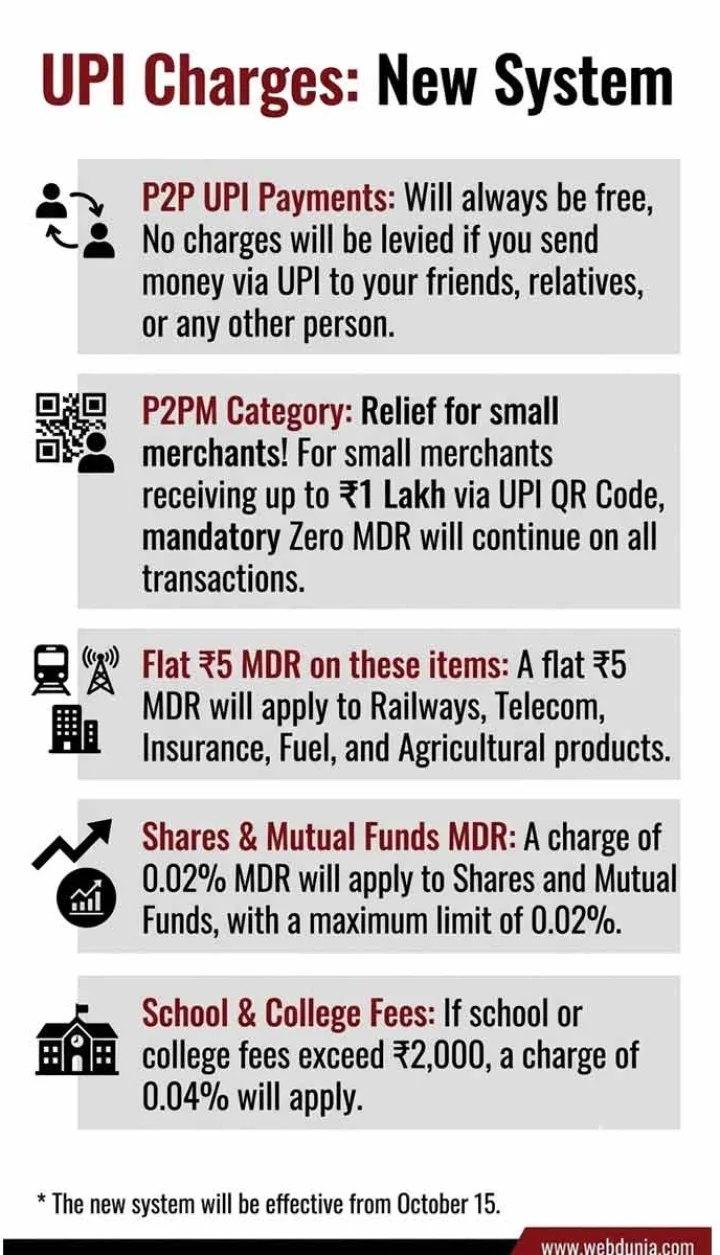
For consumers, regular UPI payments will continue to remain free. Sending money to friends, family members or another bank account belonging to you through person-to-person (P2P) transactions will not attract any charge.
No hidden platform fees
UPI apps and service providers such as Google Pay, PhonePe and Paytm will not be allowed to impose separate platform fees or hidden charges on customers under the new framework.
MDR rules: Who will have to pay?
The MDR will apply only to eligible person-to-merchant (P2M) transactions and will be subject to specific conditions.
Transactions below Rs 2,000 remain free
Merchant payments below Rs 2,000 will continue to be free. According to the figures cited in the framework, around 95% of UPI transactions fall within this category. This means everyday purchases such as vegetables, milk and tea are not expected to attract MDR.
0.4% MDR on payments above Rs 2,000
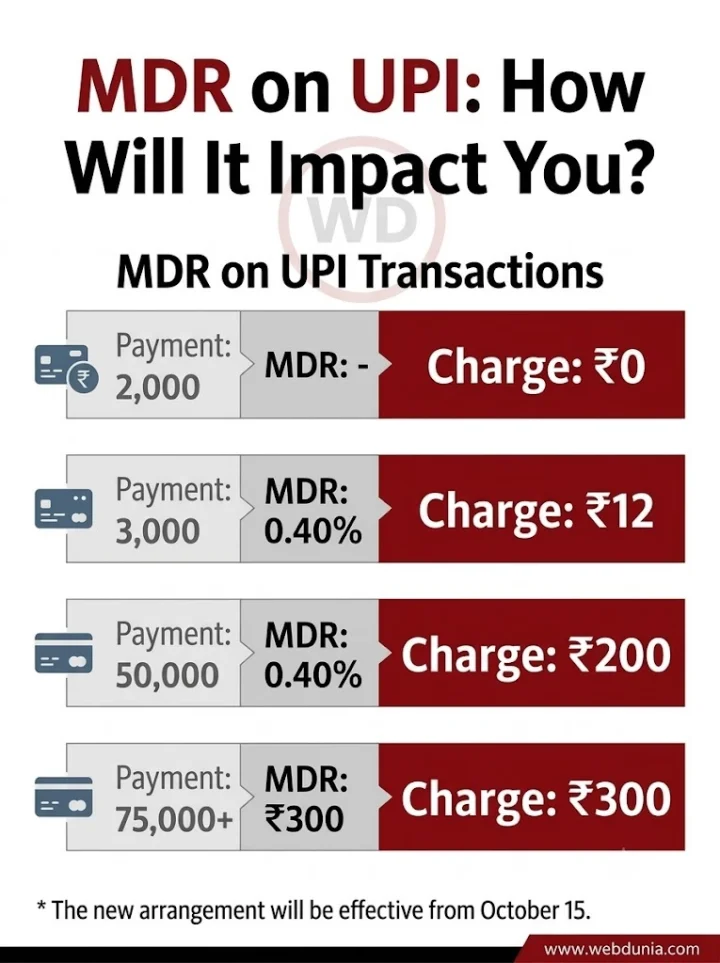
For a UPI payment of more than Rs 2,000 made directly to an eligible merchant, an MDR of 0.4% will apply.
Special MDR rates for selected sectors
Certain sectors will have separate MDR arrangements. For railway bookings, telecom services, insurance, petrol and diesel payments, and government utility bills such as electricity and water, transactions above Rs 2,000 will attract a flat MDR of Rs 5 instead of a percentage-based charge.
For mutual fund and stock market-related investment platforms, the MDR will be 0.02%, subject to a maximum cap of Rs 300 per transaction.
Merchants, not customers, will bear the MDR
The new framework specifies that the MDR is to be paid by merchants. They cannot pass the charge on to customers or add it separately to the bill.
In other words, if a product or service costs Rs 2,500, the customer should continue to pay Rs 2,500 rather than an additional MDR amount.
MDR capped at Rs 300
For high-value transactions of Rs 75,000 or more, the MDR will be capped at a maximum of Rs 300 per transaction.
What about small merchants?
Small vendors classified as P2PM merchants who process up to Rs 1 lakh a month through UPI QR codes will remain completely exempt from MDR.
They will also not need GST registration to qualify for the zero-MDR benefit.


