


Related Article
- Today's Birthday: 11th June 2026
- How is your day: 11th June 2026
- Parama Ekadashi 2026: Parana Timing, Rituals, and Rules for Fasting
- Saturn in Aries 2027: Can Shani's Transit Trigger Global Conflict or India-Pakistan War? Here's What Astrologers Claim
- Personal Loan vs Credit Card: Which Is Cheaper and Better for Borrowing Money?
Will TMC and NCP Return to Congress? Sanjay Raut Sparks ‘Grand Alliance 2.0’ Debate
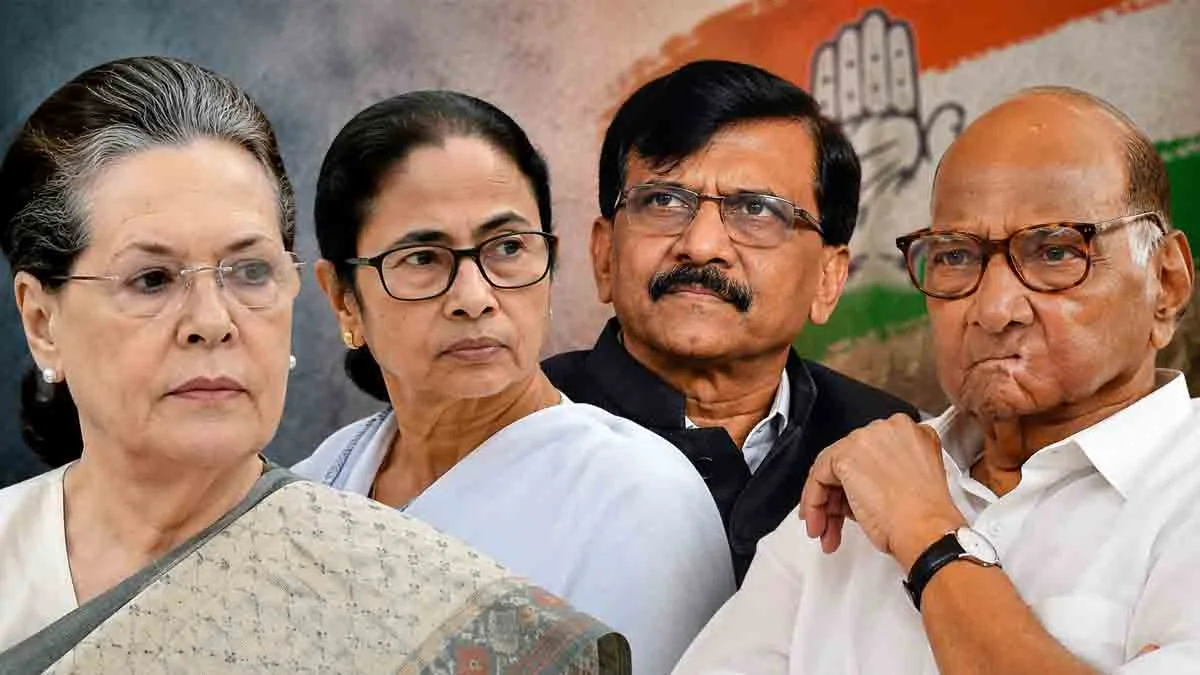
A fresh political debate has emerged in India over opposition unity and the future of regional parties. The discussion gained momentum after a recent statement by Shiv Sena (UBT) leader and Rajya Sabha MP Sanjay Raut, who suggested that regional parties formed after breaking away from Congress should consider reuniting with their parent party. His remarks have sparked intense conversations within the opposition camp and the INDIA alliance.
Raut proposed that parties such as Mamata Banerjee’s All India Trinamool Congress (TMC) and Sharad Pawar’s Nationalist Congress Party (NCP-SP) should consider merging back into Congress. According to him, a stronger and more united opposition would be better positioned to challenge the BJP in future elections.
Why Did Sanjay Raut Make This Suggestion?
Raut argues that the opposition must consolidate its strength to counter what he describes as the BJP’s growing dominance in national politics. His key points include:
Raut argues that the opposition must consolidate its strength to counter what he describes as the BJP’s growing dominance in national politics. His key points include:
1. Protecting Regional Parties
According to Raut, several regional parties are facing increasing political pressure and challenges to their long-term relevance. He believes a broader political umbrella could help preserve opposition strength.
2. Strengthening Congress
He contends that if Congress-origin parties reunite with the national party, Congress would emerge as a far stronger opposition force capable of directly challenging the BJP at the national level.
He contends that if Congress-origin parties reunite with the national party, Congress would emerge as a far stronger opposition force capable of directly challenging the BJP at the national level.
3. Changing Political Equations
The statement comes at a time when political dynamics within the opposition bloc, particularly in West Bengal and Maharashtra, are undergoing significant shifts.
What Are the Political Implications?
The statement comes at a time when political dynamics within the opposition bloc, particularly in West Bengal and Maharashtra, are undergoing significant shifts.
What Are the Political Implications?
Raut’s proposal has triggered speculation about whether such a political realignment is realistically possible.
BJP’s Response
The BJP has dismissed the suggestion, arguing that it reflects weakness and uncertainty within the opposition. Party leaders maintain that regional parties are struggling because voters have increasingly backed Prime Minister Narendra Modi and the BJP’s development-focused agenda.
BJP’s Response
The BJP has dismissed the suggestion, arguing that it reflects weakness and uncertainty within the opposition. Party leaders maintain that regional parties are struggling because voters have increasingly backed Prime Minister Narendra Modi and the BJP’s development-focused agenda.
Challenges to a Merger
While the idea may appear attractive on paper, convincing powerful regional leaders such as Mamata Banerjee and Sharad Pawar to dissolve parties they have built over decades would be an enormous challenge. Both leaders command strong regional identities and independent political structures that have often thrived outside Congress.
While the idea may appear attractive on paper, convincing powerful regional leaders such as Mamata Banerjee and Sharad Pawar to dissolve parties they have built over decades would be an enormous challenge. Both leaders command strong regional identities and independent political structures that have often thrived outside Congress.
Nevertheless, the discussion highlights the growing importance of opposition coordination as parties prepare for future electoral battles.
Could the Opposition Benefit in the 2029 Elections?
Political analysts believe that a merger between Congress and parties such as TMC or NCP-SP could provide several strategic advantages.
Could the Opposition Benefit in the 2029 Elections?
Political analysts believe that a merger between Congress and parties such as TMC or NCP-SP could provide several strategic advantages.
Reduced Vote Splitting
In states like West Bengal and Maharashtra, opposition votes are often divided among multiple parties. A unified political platform could minimize vote fragmentation and create direct contests against the BJP, potentially improving the opposition's electoral prospects.
In states like West Bengal and Maharashtra, opposition votes are often divided among multiple parties. A unified political platform could minimize vote fragmentation and create direct contests against the BJP, potentially improving the opposition's electoral prospects.
Easier Seat-Sharing
One of the INDIA alliance’s biggest challenges has been seat-sharing negotiations and local-level rivalries. A merger would eliminate many of these disputes and simplify candidate selection.
One of the INDIA alliance’s biggest challenges has been seat-sharing negotiations and local-level rivalries. A merger would eliminate many of these disputes and simplify candidate selection.
Stronger National Presence
The return of influential regional forces could strengthen Congress's national footprint and help it present itself as a more credible alternative to the BJP across the country.
Organizational Benefits
The return of influential regional forces could strengthen Congress's national footprint and help it present itself as a more credible alternative to the BJP across the country.
Organizational Benefits
TMC possesses a robust grassroots network in West Bengal, while the Sharad Pawar-led NCP faction retains significant influence in Maharashtra. Integrating these cadres with Congress' organizational structure could energize the party at both state and national levels. ALSO READ: Govt Waives Excise Duty on Ethanol-Blended Petrol; Here's What It Means for Consumers
The Roadblocks Ahead
Despite the potential advantages, major obstacles remain. Regional parties have distinct identities, leadership structures, and voter bases that may resist integration into a larger national organization. Balancing ambitions, leadership roles, and state-specific interests would be a complex task.
Despite the potential advantages, major obstacles remain. Regional parties have distinct identities, leadership structures, and voter bases that may resist integration into a larger national organization. Balancing ambitions, leadership roles, and state-specific interests would be a complex task.
As political discussions intensify ahead of the 2029 Lok Sabha elections, the idea of a broader opposition consolidation remains intriguing. Whether it evolves into reality or remains a theoretical strategy will depend on how opposition leaders navigate the competing interests within their own ranks.

Next Article


