


“Oh Sh*t…”: Cockpit Crew’s Last Words Before Ajit Pawar Plane Crash
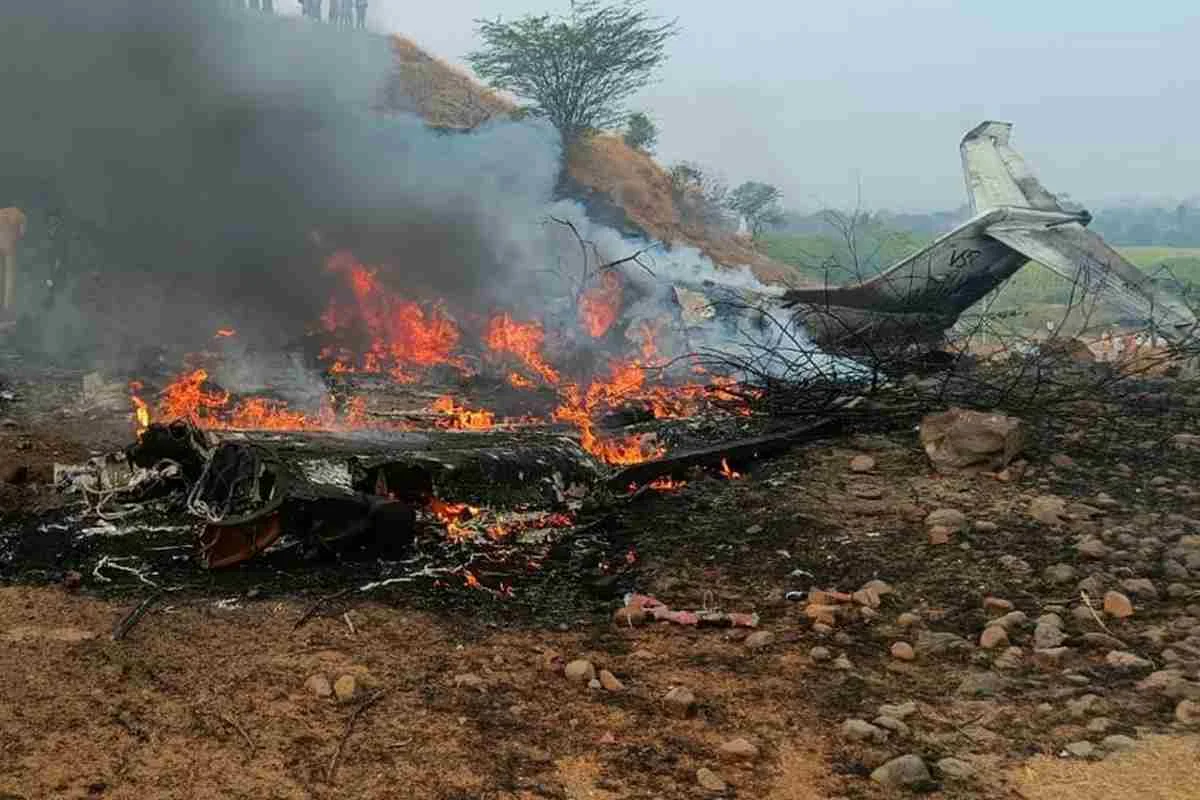
A tragic aircraft crash in Maharashtra’s Baramati claimed the lives of Deputy Chief Minister Ajit Pawar and four others. An investigation into the incident is currently underway.
Senior officials of the Directorate General of Civil Aviation (DGCA) said that the cockpit crew’s final recorded words before the crash were “Oh Sh*t…”. According to a senior official, these words were heard during the crew’s last conversation moments before the aircraft went down.
Senior officials of the Directorate General of Civil Aviation (DGCA) said that the cockpit crew’s final recorded words before the crash were “Oh Sh*t…”. According to a senior official, these words were heard during the crew’s last conversation moments before the aircraft went down.
The chartered aircraft was flying from Mumbai and was scheduled to land at Baramati airport. On board were Deputy Chief Minister Ajit Pawar, Captain Sumit Kapoor, co-pilot Captain Shambhavi Pathak, personal security officer Vidip Jadhav, and flight attendant Pinky Mali.
Officials said the aircraft crashed short of the runway threshold but within the airport boundary. Although the crash occurred inside the airstrip perimeter, the impact was severe, causing the aircraft to burst into flames immediately after hitting the ground.
Airport and Ground Control Situation
Baramati airport is classified as an “uncontrolled” airport, meaning it does not have a full-time Air Traffic Control (ATC) tower. It is a small airstrip where ground control operations are managed by pilot cadets from local aviation academies, including Red Bird Aviation and Carver Aviation.
Baramati airport is classified as an “uncontrolled” airport, meaning it does not have a full-time Air Traffic Control (ATC) tower. It is a small airstrip where ground control operations are managed by pilot cadets from local aviation academies, including Red Bird Aviation and Carver Aviation.
At 8:18 am, the aircraft registered as VT-SSK established contact with Baramati airport. At the time, Captain Kapoor—who had over 15,000 hours of flying experience—and co-pilot Pathak, with around 1,500 flying hours, were informed about the prevailing weather conditions and were advised to make a landing decision at their discretion.
According to an official statement from the ministry, the crew sought details about wind speed and visibility. They were informed that visibility was approximately 3,000 metres (three kilometres), which is considered normal and adequate for landing.
The aircraft then reported its final approach to Runway 11. Shortly thereafter, the pilot indicated that the landing strip was “not visible” and was advised to initiate a go-around, a standard operating procedure followed when a landing attempt is aborted.
After completing the go-around, the crew again reported their position and indicated readiness for a final landing. They were asked to confirm runway visibility, which they did.
At 8:43 am, the aircraft was cleared to land. However, no read-back was received from the crew acknowledging the landing clearance.
At 8:43 am, the aircraft was cleared to land. However, no read-back was received from the crew acknowledging the landing clearance.
The ministry said that at 8:44 am, Air Traffic Control observed flames near the threshold of Runway 11, confirming that the aircraft had crashed.


