


Apple's new CEO John Ternus makes AI top priority
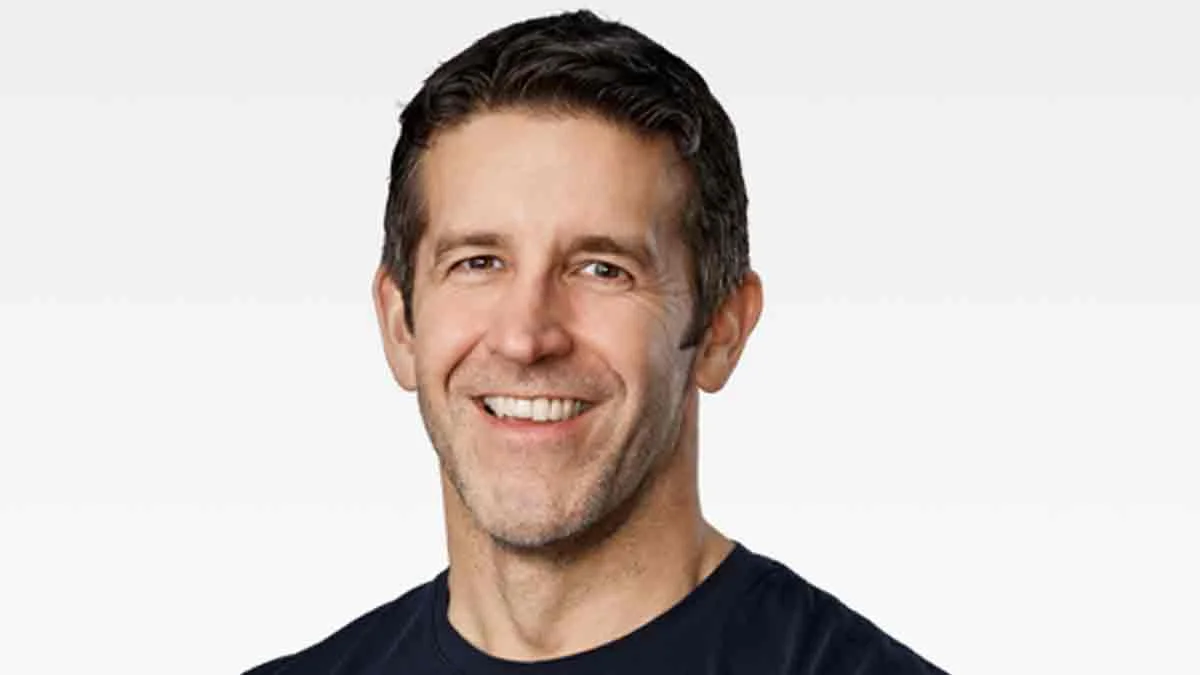
On September 1, a new era begins at Apple as John Ternus becomes just the third man to hold the CEO role at the tech giant since 1997.
Ternus was announced as Tim Cook's successor back in April, bringing Cook's 15 years at the helm of one of the world's biggest companies to an end. Since then, Ternus, a leading hardware engineer at the company, has been working closely alongside Cook in preparation for the big job.
Just as Cook had when he took over from the iconic Steve Jobs, Ternus has big shoes to fill. Apple's share price has increased by more than 2,000% since Cook took over in 2011 and the company has sold more than 3.1 billion iPhones in that time.
Ternus faces a range of challenges at Apple, but his ability to keep the company at the top will hinge on how he reshapes its AI strategy.
Apple has struggled to successfully embrace the technology so far, with critics saying it has fallen far behind its rivals.
September 9: John Ternus makes public debut
Ternus will make his public debut as CEO at Apple's Autumn product launch event on September 9. Dubbed "Surprise and Shine," Ternus is expected to announce the company's first foldable iPhone as well as a new version of an AI-powered Siri, Apple's virtual assistant.
Francisco Jeronimo, VP for Data and Analytics at tech research group IDC, said Apple's forthcoming announcements were planned during Cook's time in charge and that it will be 2027 before the direction Ternus wants to take the company in becomes apparent.
"Of course, September 9 will be quite an important milestone for the company around foldables and around innovation," he told DW.
"But I don't think we have seen anything that could indicate that Apple is behaving in a different way or is showing a different kind of strategy because Tim Cook is not in the job anymore — yet."
Apple's huge AI challenge
What observers will be looking out for from Ternus on September 9 is the extent to which he focuses his remarks on AI.
While it was already undeniable when he was announced in April that the artificial intelligence boom would be pivotal to his time at the helm, it has become even clearer in the five months since the unveiling that the AI revolution is here to stay.
"It's becoming clear that AI is not a fad, is not something that will go away in the next two or three years," said Jeronimo. "It's something that will dictate the future of most tech companies and indeed all companies."
He reckons AI could be "the most consequential technology" for Apple because it could either help it maintain its lofty position or create a set of daunting challenges.
The biggest challenge he sees is that Apple doesn't "control" AI infrastructure the way it could previously in terms of designing and controlling both the hardware and software for its key products.
"Maybe that will be what John Ternus will be doing differently from Tim Cook, because at the moment, even if Apple built their own AI technology, the reality is that they still depend on someone else," he added.
Apple's reliance on other companies in the AI realm has led it into unfamiliar territory. It struck a deal with OpenAI in 2024 to integrate ChatGPT into the iPhone, but that has led to a bitter dispute between the companies. Apple sued OpenAI earlier this year, alleging that the AI company stole its trade secrets.
Earlier this year, it announced a deal with Google, whereby the search giant's Gemini models would be used for Apple's own AI models and its new AI-powered version of Siri.
"The risk for Apple is to become less relevant in a world where companies like OpenAI and Anthropic are leading in terms of technology, in terms of awareness, in terms of services and potentially in terms of hardware," said Jeronimo.
For decades, Apple's success has been built on its physical products, from the iPad to the iPhone.
"If devices from OpenAI become available, that could be very, very risky for Apple. They could completely disrupt the experience and the way we interact with technology. And if Apple is not on the front of that innovation, that is a big risk," he said.
A combination of Jobs and Cook?
Ternus' background as an engineer who worked on Apple's core products, as well as innovations such as the Apple Watch and AirPods, means he will be expected to lead the way on new AI-driven products for the company.
He also played a central role championing Apple's shift to designing its own chips instead of relying on external suppliers like Intel — precisely the kind of independence Apple would like to achieve when it comes to AI.
Jeronimo thinks Apple still has big advantages, given its massive volume of users as well as the company culture of having dominated innovation in tech for decades. He thinks if Apple can get to grips with AI under Ternus, it could lead to huge success: "What we will see in the next years will dictate whether Apple is on the right track or if they are really struggling."
For Ternus, the first task will be to simply fit smoothly and convincingly into a role that both Jobs and Cook undeniably made their own. "Steve Jobs was the guru of innovation and disruption and Tim Cook was the guru of execution," saidJeronimo.
"I think John Ternus can be a combination of both." ALSO READ: Apple's First Foldable iPhone Could Arrive This Year, May Feature 12GB RAM and 5,800mAh Battery


