


From Delhi to Paris: Why Is Gen Z Taking to the Streets? Global Pattern or Conspiracy?
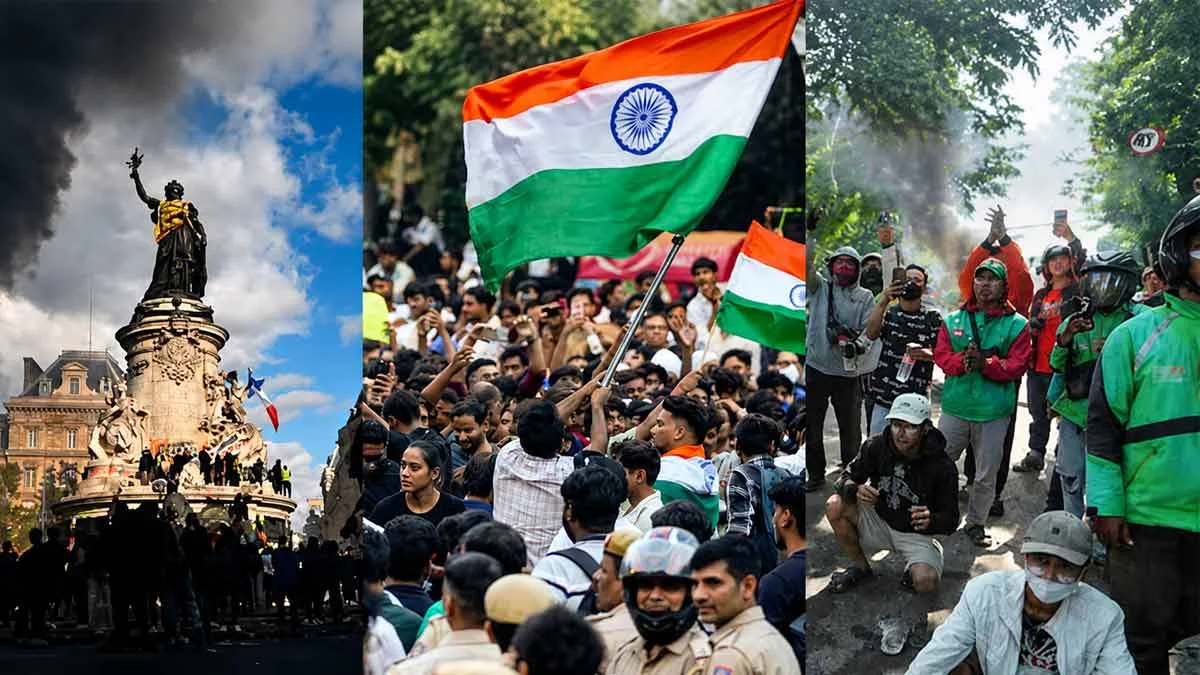
In October 2026, several European countries are witnessing a fresh wave of youth-led protests. From France, Italy, Albania and Spain to Portugal and Belgium, young people and students belonging to Generation Z—generally defined as those born between 1997 and 2012—are taking to the streets to voice their anger and demand change.
In France, student protests that began in September 2026 have expanded beyond education and tuition fees. Rising living costs, deteriorating public services and growing social inequality have emerged as major concerns. According to the international media reports, including BBC and CNN, more than 550,000 young people took to the streets in various French cities on a single day.
Meanwhile, young people in Italy are mobilising under the banner of the “Italia in Piazza” movement to protest inflation and the housing crisis. In Albania, students associated with the “Flamingo” movement are demanding the resignation of Prime Minister Edi Rama.
These developments raise an important question: Why is a generation often associated with digital screens, social media and online activism increasingly turning to street protests? Is this simply an expression of economic frustration, or does it point to a deeper global pattern—or even a coordinated effort behind the scenes?
Economic Pressure, Inflation and the Housing Crisis
Geopolitical tensions, energy-related disruptions and persistent inflation since 2020 have placed considerable pressure on young people's financial prospects and expectations for the future.
Housing is becoming increasingly unaffordable: In European cities such as Paris, Rome, Madrid and Brussels, rising rents and property prices are making independent living increasingly difficult. For many young people, the salary from a first job may not be enough to afford a home or even a room without significant financial strain.
Unemployment and shrinking opportunities: Young people are also concerned about the availability of stable, well-paying jobs. Questions about the value of traditional degrees, combined with the growing influence of automation and artificial intelligence (AI), have added to uncertainty about future employment. These pressures can contribute to frustration among those who feel that education and hard work may no longer guarantee financial security.
The Rise of Leaderless Protests
A striking feature of contemporary youth-led movements is the way they organise themselves. Unlike many student movements of the past, protests today may emerge without a single recognised leader, established political party or traditional trade union directing them.
Comparisons with the student movements of 1968 and India's JP movement of the 1970s highlight how the methods of mobilisation have changed.
Digital solidarity: Platforms such as Telegram, Signal and TikTok allow people to circulate information, share grievances and coordinate demonstrations rapidly. Hashtags and accounts that do not necessarily represent established organisations can help bring people together around common concerns.
Rapid mobilisation: A controversial government announcement, a proposed fee increase or a statement by a public official can trigger a swift response. Young people may organise demonstrations at public squares and major intersections without waiting for instructions from a prominent leader.
Is There a Global Conspiracy—or a Shared Pattern of Frustration?
When youth protests emerge across several countries within a relatively short period, allegations of foreign interference or coordinated international efforts often enter the political debate.
The conspiracy argument: Some political figures and analysts allege that international pressure groups, non-governmental organisations (NGOs) or foreign actors may use social media platforms and their algorithms to influence public opinion and destabilise governments.
The structural explanation: Another interpretation is that young people in different countries are responding to similar economic and social pressures. Rising living costs, housing shortages, concerns about employment, distrust of institutions and dissatisfaction with political leadership are not confined to any one nation.
The internet has also created a shared global information environment. Young people in France can see demonstrations in Spain or Albania almost immediately, while those in other countries can follow similar developments online. Seeing people of their own age express familiar frustrations may help them recognise common concerns and inspire them to organise locally.
A Fight for Dignity and Accountability
Economic hardship is not the only factor that can bring Gen Z onto the streets. The way political leaders and public officials respond to young people can also influence the scale and intensity of public anger.
Statements that dismiss young people as irresponsible, entitled or dependent can deepen existing resentment. Concerns about the fairness of democratic institutions, transparency in governance and the willingness of authorities to listen to citizens may further fuel demonstrations.
Why Gen Z's Anger Cannot Be Dismissed as Online Activism
The developments of 2026 highlight the limitations of viewing Gen Z as a generation interested only in online campaigns, viral videos and memes.
Digital platforms can help young people discover common concerns, but the decision to protest in person often reflects dissatisfaction that extends beyond the online world. When housing becomes unaffordable, job prospects appear uncertain and the cost of everyday living rises, frustration can move from digital discussions to public demonstrations.


