


The Naths: India’s Wandering Yogis
:- Aditya
You have probably heard the word gorakhdhandha. People use it for a messy, shady business, one where nobody can say what is really going on. Most of them don’t know that Gorakh was a real man. He was a yogi.The story is that his followers spoke in riddles and did strange things, so people began to call any confusing work “Gorakh’s dhandha”. On 18 August 2021 the Haryana government stopped the use of this word in official work, after people from the Gorakhnath community said it hurt their feelings. I understand why. But the word fits the Naths in one way. They have always been hard to pin down.
Nobody knows who started the Nath Sampradaya. There is no book that began it, and there is no one head of the whole group. If you ask a Nath, he won’t give you a date. He will give you a line of gurus. The line starts with Shiva, whom they call Adinath, the first lord. Next come two gurus who were men, Matsyendranath and his student Gorakhnath. Their main idea is simple: you don’t have to wait for death to be free. You can get there in this life, in this body, with control of the breath, the right postures, and many years of hard practice.
Matsyendranath is more story than fact. The best-known story says a fish swallowed him. Inside the fish he heard Shiva teaching yoga to Parvati at the bottom of the sea. Historians think he was a teacher of the Kaula path, around the ninth or tenth century. In Nepal he is called Macchindranath, and in Patan, near Kathmandu, his chariot is pulled through the streets for a month every year.
Gorakhnath is a little easier to place, but only a little. Nobody agrees on when he lived. Some say the tenth century, some say the thirteenth, and one old guess goes to the fourteenth. The story told about him most is about a rescue. Matsyendranath went to a land ruled by women. He liked it so much that he forgot all his yoga. Gorakhnath went there to bring him back. He took a drum and played it until the beat woke his guru up.People like this story because the student ends up teaching the teacher. Tradition counts nine great Naths, the Navnath, and Bharthari, a king who became a yogi, is on most lists.
The Nath idea fits in four words: don’t wait to die. Freedom after death sounds nice, but nobody has come back to say it is true. The Naths wanted something they could test in this life. The only thing a person can test things on is his own body. A text linked to Gorakhnath, the Siddha-Siddhanta-Paddhati, calls the body a small world, with its own paths inside and its own sun and moon. Learn to control the body, it says, and you can control everything else.
This is how the Naths became tied to hatha yoga. They didn’t invent all of it, though. James Mallinson, a scholar of yoga, says many of the methods are found earlier in Buddhist tantric books. What the Naths gave was a home for these methods, and a famous line of teachers. There is a short book in Gorakhnath’s name, the Goraksha Shataka, that has six steps of yoga, while Patanjali has eight. The two rules of good conduct that begin Patanjali’s list are missing. The book goes straight to the body.
Their aim was a body that would not rot. Some Naths took this word for word and worked with mercury. I would not advise that to anyone. Others took it to mean a state of mind that death cannot touch. I think that is one reason the group lasted so long.
Sanskrit belonged to priests and kings’ courts, and the Naths mostly kept away from it. The verses that go under Gorakhnath’s name were collected in the last century by Pitambar Datt Barthwal, in a book called the Gorakhbani. The language is early Hindi, short and rough, with many riddles. The people who listened were farmers and weavers. They would give a travelling yogi a few rotis and let him sleep near their fire.
These verses are hard on caste and on empty rituals. One well-known couplet says the Hindu remembers God in the temple, the Muslim in the mosque, and the yogi looks for the place where there is neither. Gorakhnath may not have written it, but it sounds like him. There were whole groups of Muslim jogis in Bengal, Punjab and Rajasthan who were part of this tradition. They sang the story of King Gopichand, who left his throne because his mother, Mayanamati, told him to follow a yogi.
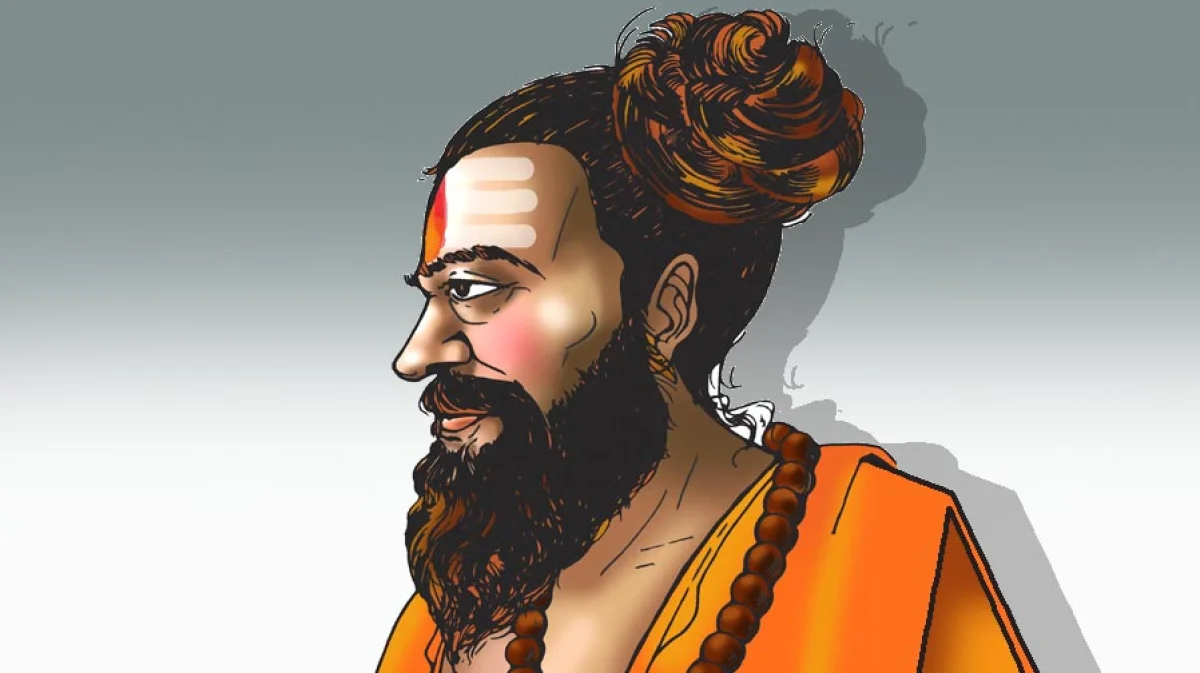
Not every Nath wanders, and not every Nath is a Kanphata, a “split-ear” yogi. A Kanphata has the soft bone of his ears cut, and big rings, called mudras, are put in. It hurts. Everybody can see it. And it can’t be undone. That is part of the point, because it ties him to Gorakhnath more strongly than any promise can. In Waris Shah’s Punjabi poem Heer, Ranjha goes through this at Tilla Jogian, a hilltop near Jhelum, and becomes a jogi. That place is in Pakistan now, and it has been empty since 1947.
Kanphatas greet each other with the word Adesh. Wherever they camp, they keep a holy fire, the dhuni, burning. When one of them dies, he is buried, often sitting up, and not burnt.
Every January, around Makar Sankranti, the Gorakhnath temple in Gorakhpur, the city named after him, holds the khichdi mela. It goes on for more than a month. There is a story behind it. Gorakhnath once visited the goddess Jwala Devi at Kangra. She put water on the fire to boil, and he went out to beg for grain to cook. He never came back. The devotees say the water is still boiling.
The Naths never had a pope, and that probably helped them survive. Each guru keeps his own line, so a Nath in Nepal and a Nath in Kutch may share little more than the name. There are fewer wandering yogis today.Highways have covered the old pilgrim roads, and begging pays less in a city than in a village. But the monasteries go on, and in Rajasthan you can still hear folk singers sing the songs of Gorakh and Bharthari.
The Gorakhnath Math in Gorakhpur is the best-known Nath place in public life, and its link with politics is not new. Mahant Digvijaynath, who led the Math from the mid-1930s, won the Gorakhpur Lok Sabha seat in 1967. His successor, Avaidyanath, was elected to Parliament several times. Yogi Adityanath took charge of the Math in 2014. He had been elected from Gorakhpur five times from 1998, and became Chief Minister of Uttar Pradesh in 2017. Supporters say this is a religious order stepping up to serve the public. Critics say it is a religious place lending itself to a political party.
If you want to understand the Naths, start with the Gorakhbani. After that, you have to go and sit with them for a while. Books can only take you so far.
Authour is from ARSD College, University of Delhi
You have probably heard the word gorakhdhandha. People use it for a messy, shady business, one where nobody can say what is really going on. Most of them don’t know that Gorakh was a real man. He was a yogi.The story is that his followers spoke in riddles and did strange things, so people began to call any confusing work “Gorakh’s dhandha”. On 18 August 2021 the Haryana government stopped the use of this word in official work, after people from the Gorakhnath community said it hurt their feelings. I understand why. But the word fits the Naths in one way. They have always been hard to pin down.
Matsyendranath is more story than fact. The best-known story says a fish swallowed him. Inside the fish he heard Shiva teaching yoga to Parvati at the bottom of the sea. Historians think he was a teacher of the Kaula path, around the ninth or tenth century. In Nepal he is called Macchindranath, and in Patan, near Kathmandu, his chariot is pulled through the streets for a month every year.
This is how the Naths became tied to hatha yoga. They didn’t invent all of it, though. James Mallinson, a scholar of yoga, says many of the methods are found earlier in Buddhist tantric books. What the Naths gave was a home for these methods, and a famous line of teachers. There is a short book in Gorakhnath’s name, the Goraksha Shataka, that has six steps of yoga, while Patanjali has eight. The two rules of good conduct that begin Patanjali’s list are missing. The book goes straight to the body.
Sanskrit belonged to priests and kings’ courts, and the Naths mostly kept away from it. The verses that go under Gorakhnath’s name were collected in the last century by Pitambar Datt Barthwal, in a book called the Gorakhbani. The language is early Hindi, short and rough, with many riddles. The people who listened were farmers and weavers. They would give a travelling yogi a few rotis and let him sleep near their fire.
Not every Nath wanders, and not every Nath is a Kanphata, a “split-ear” yogi. A Kanphata has the soft bone of his ears cut, and big rings, called mudras, are put in. It hurts. Everybody can see it. And it can’t be undone. That is part of the point, because it ties him to Gorakhnath more strongly than any promise can. In Waris Shah’s Punjabi poem Heer, Ranjha goes through this at Tilla Jogian, a hilltop near Jhelum, and becomes a jogi. That place is in Pakistan now, and it has been empty since 1947.
Every January, around Makar Sankranti, the Gorakhnath temple in Gorakhpur, the city named after him, holds the khichdi mela. It goes on for more than a month. There is a story behind it. Gorakhnath once visited the goddess Jwala Devi at Kangra. She put water on the fire to boil, and he went out to beg for grain to cook. He never came back. The devotees say the water is still boiling.
The Naths never had a pope, and that probably helped them survive. Each guru keeps his own line, so a Nath in Nepal and a Nath in Kutch may share little more than the name. There are fewer wandering yogis today.Highways have covered the old pilgrim roads, and begging pays less in a city than in a village. But the monasteries go on, and in Rajasthan you can still hear folk singers sing the songs of Gorakh and Bharthari.
The Gorakhnath Math in Gorakhpur is the best-known Nath place in public life, and its link with politics is not new. Mahant Digvijaynath, who led the Math from the mid-1930s, won the Gorakhpur Lok Sabha seat in 1967. His successor, Avaidyanath, was elected to Parliament several times. Yogi Adityanath took charge of the Math in 2014. He had been elected from Gorakhpur five times from 1998, and became Chief Minister of Uttar Pradesh in 2017. Supporters say this is a religious order stepping up to serve the public. Critics say it is a religious place lending itself to a political party.
If you want to understand the Naths, start with the Gorakhbani. After that, you have to go and sit with them for a while. Books can only take you so far.
Authour is from ARSD College, University of Delhi


