


Modi Chalisa Row: Is Worshipping Living People Allowed in Hinduism?
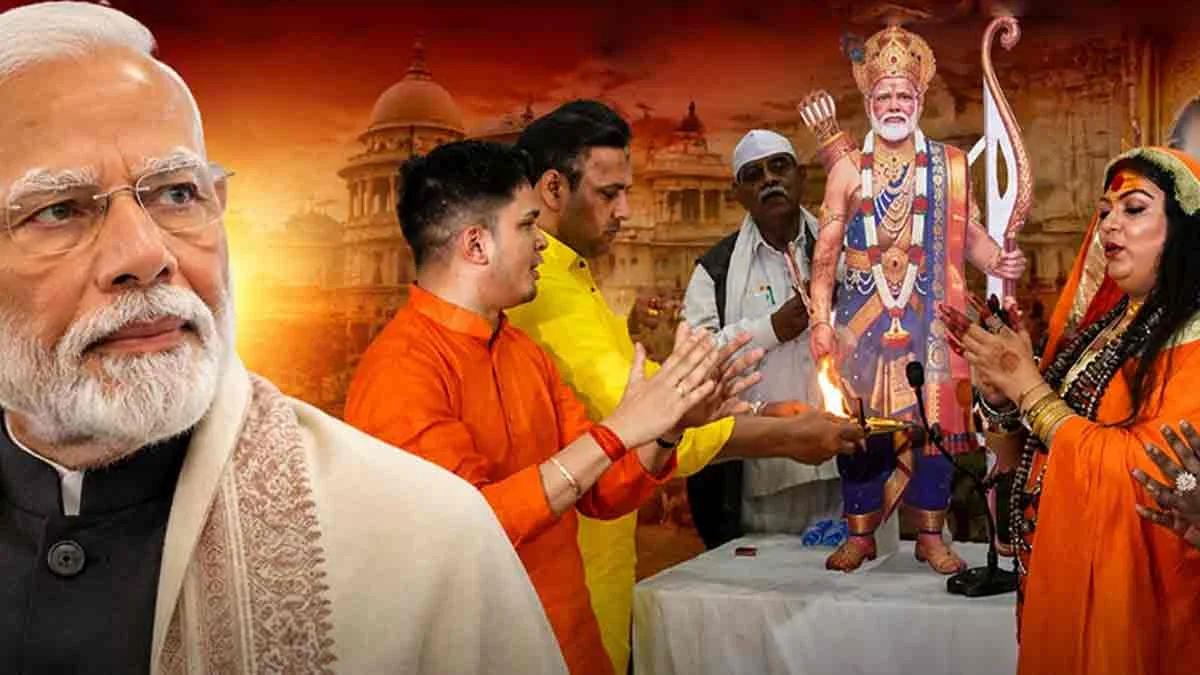
Across India, there have been instances where politicians, actors and other public figures have been elevated to the status of gods, with temples built in their names and rituals such as aarti and worship performed in their honour. Reports of temples dedicated to personalities such as Sachin Tendulkar, Rajinikanth, Amitabh Bachchan, Narendra Modi and Sonia Gandhi have surfaced from time to time.
The issue has once again come into focus amid discussions surrounding a so-called “Narendra Modi Chalisa.” This has raised a broader question: according to Hindu religious traditions and scriptures, what is the difference between respecting an influential person and worshipping them as a divine being?
Many traditional interpretations of Hindu scriptures hold that worship is directed towards the divine, while reverence and respect may be offered to teachers, saints, ancestors and great personalities. However, interpretations and practices vary across Hindu traditions and communities.
Worship and Person Worship in Hindu Traditions
According to one traditional interpretation, Hindu scriptures prescribe the worship and devotion of God, goddesses and divine forms, while treating the worship of ordinary human beings as distinct from divine worship.
The Bhagavad Gita discusses different forms of worship based on the nature of an individual's faith. One verse often cited in such discussions is from Chapter 17, Verse 4:
“Yajante sattvika devan yaksha-rakshamsi rajasah,
pretan bhuta-ganams chaanye yajante tamasa janah.”
Meaning: Those of a sattvic nature worship the gods; those of a rajasic nature worship yakshas and rakshasas; while those of a tamasic nature worship spirits and other such beings.
Another verse from Chapter 9, Verse 25 states:
“Yanti deva-vrata devan pitrun yanti pitru-vratah,
bhutani yanti bhutejya yanti mad-yajino 'pi mam.”
Meaning: Worshippers of the gods attain the gods, worshippers of the ancestors attain the ancestors, those who worship spirits attain such beings, while those devoted to the Supreme attain Him.
These verses are often interpreted to distinguish between devotion directed towards the Supreme and other forms of worship.
Devotion to the Supreme
The Bhagavad Gita repeatedly emphasises surrender and devotion to the Supreme Being. Chapter 18, Verse 62 says:
“Tam eva sharanam gaccha sarva-bhavena Bharata,
tat-prasadat param shantim sthanam prapsyasi shashvatam.”
Meaning: O Arjuna, take refuge in Him alone with your whole being. By His grace, you will attain supreme peace and the eternal abode.
Similarly, Chapter 8, Verse 8 states:
“Abhyasa-yoga-yuktena chetasa nanya-gamina,
paramam purusham divyam yati Parthanuchintayan.”
Meaning: One who constantly meditates upon the Supreme Divine Being with a mind disciplined through the practice of yoga ultimately attains Him.
Chapter 8, Verse 16 further says:
“A-brahma-bhuvanal lokah punar-avartino 'rjuna,
mam upetya tu Kaunteya punar janma na vidyate.”
Meaning: All worlds, up to Brahmaloka, are subject to return and rebirth, but one who attains the Supreme does not take birth again.
The Debate Over Worshipping Saints, Ancestors and Historical Figures
The article's central argument is based on a particular scriptural interpretation that distinguishes respect and remembrance from formal worship. Under this view, saints, teachers, ancestors, rulers and other respected individuals may be honoured for their contributions, but should not necessarily be equated with God.
Practices such as visiting samadhis, dargahs or memorials are also viewed differently across religious and cultural traditions. For many people, these places represent faith and devotion, while others regard them primarily as sites of remembrance, history or respect rather than divine worship.
Similarly, temples and memorials dedicated to historical figures or acts of sacrifice may hold deep cultural and emotional significance, even as debates continue over whether such personalities should be treated as divine beings.
What Does the Concept of the 16 Kalas Mean?
Traditional Hindu philosophy also contains the concept of “kalas” or degrees of divine manifestation, although interpretations differ across texts and traditions.
According to one traditional explanation, an ordinary human being is associated with a limited manifestation of these qualities, while rishis, saints and great spiritual personalities are believed to possess a higher degree of spiritual consciousness. Divine beings are described as possessing greater manifestations of these qualities.
Lord Rama is traditionally described as possessing 12 kalas, while Lord Krishna is associated with 16 kalas, representing a complete manifestation in certain Hindu philosophical traditions.
Based on this interpretation, the article argues that the worship of a mortal human being should not be equated with the worship of a divine form.
Sattvic, Rajasic and Tamasic Forms of Worship
Hindu philosophy broadly classifies human tendencies and forms of worship into three categories:
- Sattvic: Worship associated with purity, selflessness and devotion to the divine.
- Rajasic: Worship motivated by worldly desires, rewards or personal gains.
- Tamasic: Worship associated with ignorance, fear or blind attachment.
The classification of a particular practice, however, can vary depending on the scriptural tradition and interpretation being followed.
Chalisa and Stuti: Their Traditional Context
Texts such as the Hanuman Chalisa and Durga Chalisa are devotional compositions associated with revered divine figures and forms of worship. The growing discussion over compositions dedicated to living political leaders or public personalities has therefore sparked a debate over the boundaries between devotion, admiration and personality cults.
Critics of person worship argue that writing a chalisa in the name of a living political or public figure may blur the distinction between respect for an individual and religious devotion.
Respect Is Not the Same as Worship
A central point in this debate is the difference between respect and worship. Hindu traditions have long emphasised respect for teachers, saints, national figures, rulers and individuals who have made important contributions to society.
However, critics of personality cults argue that admiration should not automatically lead to religious rituals or the declaration of a living person as a god.
The Debate Over Temples and Rituals in Name of Narendra Modi
The discussion surrounding the alleged “Narendra Modi Chalisa” has brought this issue back into the spotlight. Critics argue that when temples are built or devotional rituals are performed in the name of living political leaders, it can encourage a culture of excessive personality worship.
The original argument further states that individuals whose names are used for such practices have a moral responsibility to clarify their position if they believe such rituals are inappropriate. Supporters, however, may view such expressions as acts of admiration rather than formal religious worship. ALSO READ: Will 13 Muslim Nations Attack India? Mecca Defense Pact Revive Bhavishya Malika Prediction


